

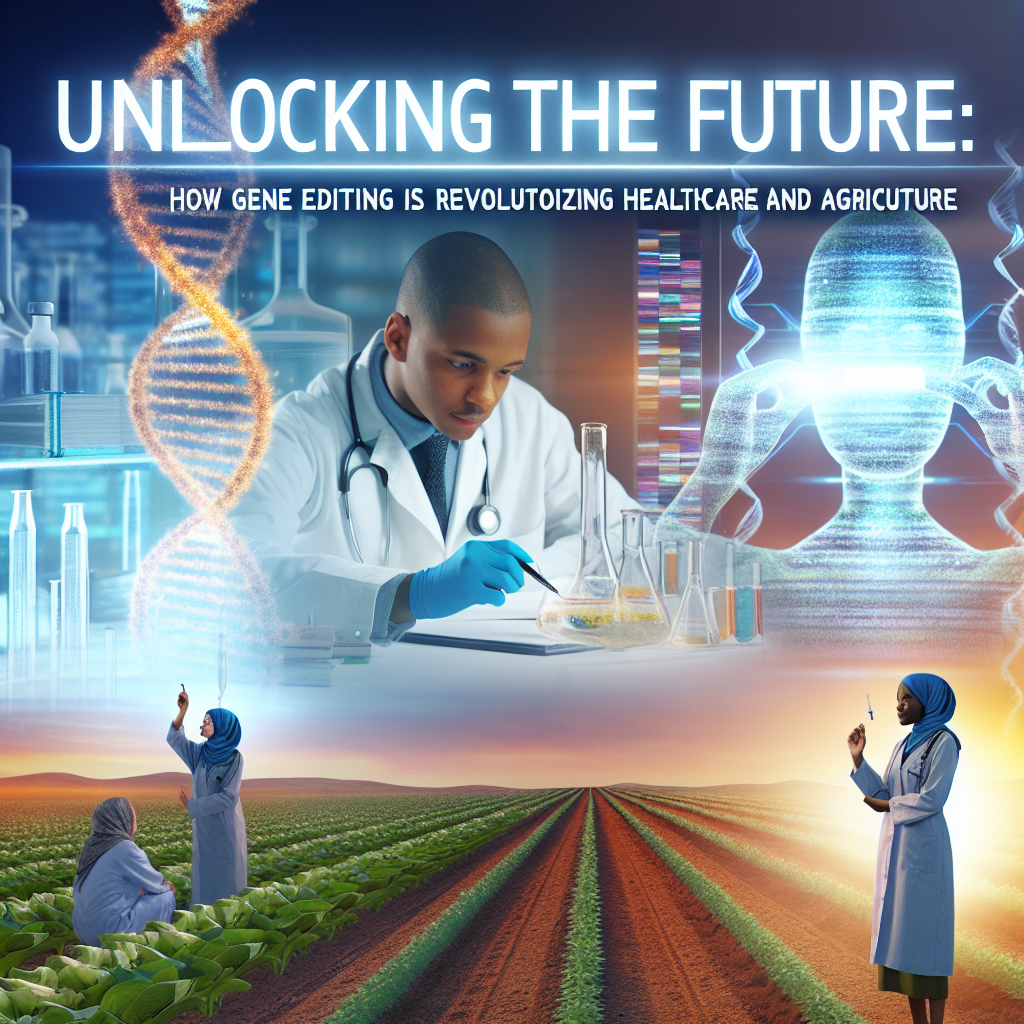
Unlocking the Future: How Gene Editing is Revolutionizing Healthcare and Agriculture
Have you ever wished you could press a reset button on a frail plant or an ailing body? In the realm of science fiction, this might sound like a plot device. However, with the advent of gene editing technologies, we’re getting closer to a reality where we can edit the very blueprint of life. Imagine crops that are not only resistant to disease but also enriched with essential vitamins. Consider medical therapies that could target genes responsible for genetic disorders before symptoms even appear. Welcome to the fascinating world of gene editing, where the potential to revolutionize healthcare and agriculture is exploding.
The Basics of Gene Editing: What Are We Talking About?
At its core, gene editing refers to a group of technologies that allow scientists to change an organism’s DNA. One of the most talked-about techniques is CRISPR-Cas9, a highly efficient method that acts almost like a pair of molecular scissors, cutting DNA at precise locations. This incredible ability allows for the addition, deletion, or alteration of genetic material. If that sounds complicated, think of it as customizing your favorite video game avatar, but here, instead of choosing hair or eye color, you’re editing genes to secure health and food security.
Gene Editing in Healthcare: A New Wave of Treatment
The potential for gene editing in healthcare is immense. Consider the revolutionary work being done for genetic diseases like cystic fibrosis, sickle cell anemia, and even certain forms of cancer. For individuals with sickle cell disease, the CRISPR-Cas9 technique has been used to modify genes in blood-making cells, effectively correcting the underlying issues. A real-world case involved a patient named Victoria Gray, who underwent treatment that has given her a new lease on life, showcasing the tangible impact of this technology.
- Personalized Medicine: Gene editing opens doors for tailored treatments, meaning therapies can be customized to fit individual genetic profiles. Think of it as getting a gaming headset that adjusts to your unique hearing profile, designed to enhance your gaming experience—except it’s tailored to your specific genetic makeup.
- Fighting Viral Diseases: In the face of the COVID-19 pandemic, researchers are exploring ways to modify genes to enhance the immune response to the virus. Imagine an in-game shield that not only protects your character but also boosts its abilities!
- Potential Cures vs. Treatments: While traditional medicine often only alleviates symptoms, gene editing holds the promise of potentially curing diseases at their root. It’s akin to finding a cheat code that wipes out the problem rather than merely navigating around it.
Transforming Agriculture: Sustainable Solutions for Food Security
Just as healthcare is reaping the benefits of gene editing, agriculture is undergoing a seismic shift. The global population is expected to reach 9.7 billion by 2050, necessitating an increase in food production. Gene editing technologies offer a powerful toolkit to address this challenge.
- Crop Resilience: By enhancing the genetic makeup of crops, farmers can create strains that resist drought, pests, and diseases, similar to how gamers level up their characters’ abilities to thrive in tougher environments.
- Nutrient Enrichment: Gene editing can help fortify crops with essential nutrients. For instance, researchers are developing rice enriched with vitamin A to combat malnutrition, offering a real-time solution akin to finding a rare item that significantly boosts your character’s stats.
- Reducing Chemical Inputs: Gene-edited crops may require fewer pesticides and fertilizers, which not only saves farmers money but also minimizes environmental impact. Think of it as optimizing your game strategy—doing more with less effort.
Ethical Considerations: Navigating the Frontier
While the promise of gene editing is exhilarating, it doesn’t come without a set of ethical challenges. Questions arise about safety, long-term effects, and the potential for unintended consequences. An important mainstay of this discussion is the concern regarding ‘designer babies’—the notion that we could edit the genes of humans not just for health but for desired traits like intelligence or physical appearance. This is a confusing landscape, much like navigating a vast, open-world game where every decision can alter the outcome.
The conversation around regulations is critical, too. Countries like the U.S. and China are advancing gene editing research at differing paces, highlighting the need for an international framework to ensure its responsible use. As players often discuss the fairness of a game’s mechanics, the same scrutiny should apply to the rapid advancements in gene editing, demanding that ethical considerations be put front and center.
Practical Applications: From Lab to Real Life
Turning theory into practice is where the magic happens. Here are some exciting real-world applications of gene editing that are already making waves:
- Golden Rice: This genetically modified rice variety is engineered to produce beta-carotene, addressing vitamin A deficiencies in developing countries. It’s similar to a game update that tackles a major bug by enhancing the core experience.
- Beetles vs. Diseases: Scientists are using gene editing to create mosquitoes that can’t transmit malaria, a game-changer in the fight against this deadly disease. Imagine an anti-virus patch preventing a malware intrusion in your gaming setup!
- Tomato Traits: Researchers have developed tomatoes with improved taste and shelf life through gene editing, giving farmers and consumers a win-win situation that celebrates quality over mere quantity.
Looking Ahead: A Future We Can Shape
As we venture further into the uncharted waters of gene editing, it’s clear that this technology will shape our health and food systems. Whether you’re a healthcare professional, a farmer, or simply a curious onlooker, the advancements in gene editing offer something to excite everyone.
By embracing responsible practices and conducting open discussions about the ethical implications, we can harness the potential of gene editing to build a healthier future for generations. Just like players strategize and adapt to new challenges in their games, humanity must remain vigilant and engaged as it unlocks the future of gene editing.
So, the next time you find yourself munching on a nutrient-enriched snack or benefiting from a groundbreaking treatment, remember that behind these advancements is a dedicated group of scientists working to write the next chapter in our story. Let’s celebrate the ingenuity of gene editing while ensuring we proceed with care—after all, it’s a game we’re all playing together.

