

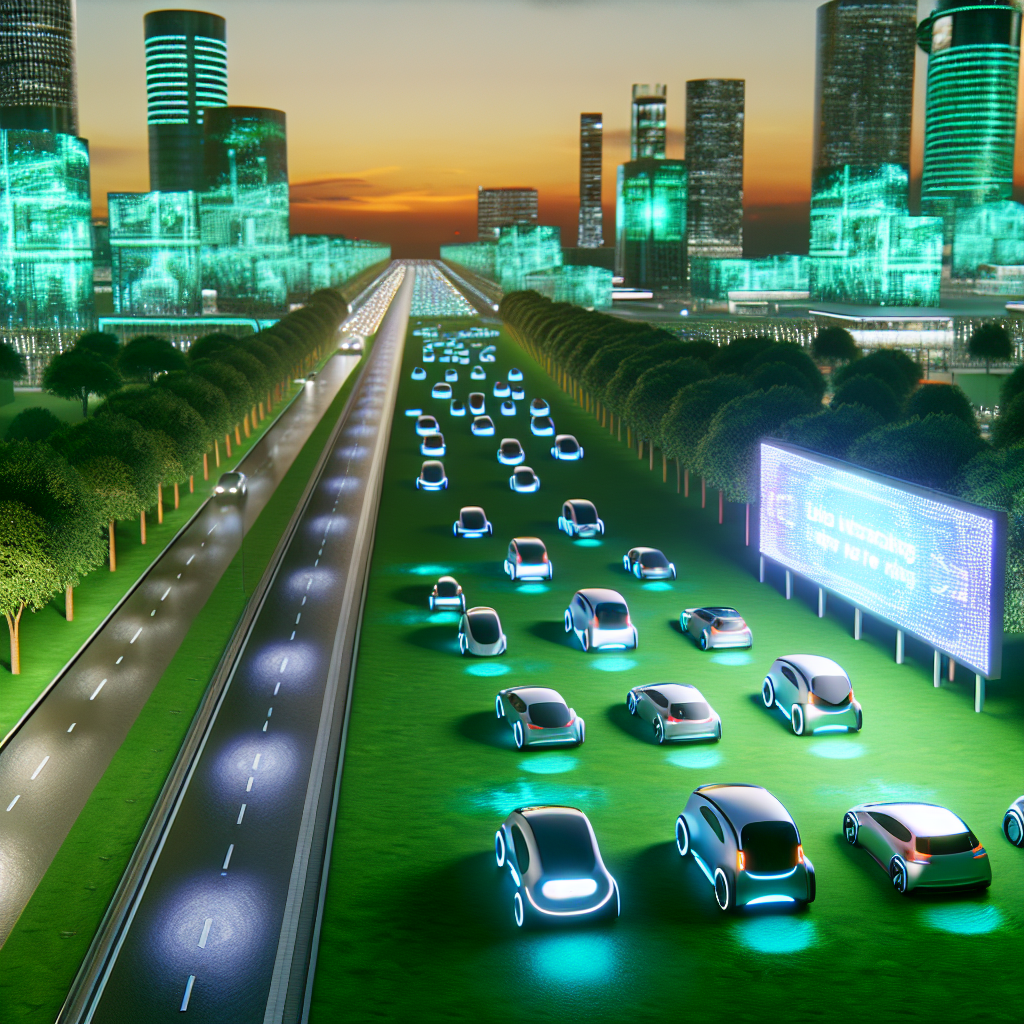
Unlocking the Future: How Autonomous Vehicles are Revolutionizing Transportation
Imagine a world where your car knows your destination before you even start the engine. Picture pulling out your phone just to summon your autonomous vehicle, which arrives at your curb without any hassle. This isn’t the plot of a sci-fi movie; it’s the future of transportation that is rapidly becoming a reality. The rise of autonomous vehicles (AVs) is more than just a tech innovation; it’s a revolution that could redefine our relationship with transportation and reshape our cities. So, let’s dive into this fascinating world and see how AVs are changing the game.
Understanding Autonomous Vehicles
At its core, an autonomous vehicle is a car that can drive itself without human intervention. Think of it as a smart companion on wheels. These vehicles utilize a combination of sensors, cameras, and artificial intelligence (AI) to navigate and respond to their surroundings. There are various levels of autonomy, ranging from fully manual to fully autonomous (Level 5), where no human input is needed.
Before diving deeper, let’s look at the benefits that these vehicles promise:
- Increased Road Safety: One of the primary goals of AV technology is to reduce accidents caused by human error, which accounts for about 94% of traffic collisions.
- Efficiency: Autonomous vehicles can optimize routes, reduce congestion, and lower carbon emissions.
- Accessibility: AVs can make transportation more accessible for people unable to drive, including the elderly and individuals with disabilities.
Real-World Applications: Autonomous Vehicles in Action
It’s not just theoretical; several companies are already putting autonomous vehicles on the road in various capacities. For instance, Waymo, a leader in this space, has launched driverless taxi services in select areas of Phoenix, Arizona. Passengers can summon a fully autonomous minivan through an app, allowing for a seamless ride without a human driver. In 2021, Waymo received positive feedback from passengers who enjoyed the convenience and comfort of being driven without a human driver at the wheel.
Another exciting development comes from Tesla, which is incorporating autonomous features in its electric vehicles. With the Full Self-Driving (FSD) package, Tesla owners can experience some degree of autonomous functionality that assists in navigating traffic, changing lanes, and parking. While it’s not fully autonomous yet, it showcases the potential of integrating AV technology into consumer vehicles.
The Impact on Urban Living
Imagine a city where traffic jams are a thing of the past. With widespread adoption of autonomous vehicles, this could become a reality. Urban planners are already envisioning how AVs could reshape city infrastructure. Less need for parking lots means more green spaces, parks, and community areas.
Furthermore, public transportation systems could become more efficient as AVs can be integrated into bus fleets. On-demand autonomous shuttles could transport people to and from public transport hubs, making commuting a breeze.
Challenges on the Road Ahead
Of course, the journey toward a fully autonomous future isn’t without its bumps. The technology behind AVs is evolving, but there are still significant challenges to address:
- Legislation and Regulation: Governments are still formulating rules regarding the testing and deployment of AVs. Safety standards and liability insurance are critical issues that need to be resolved.
- Public Perception: Trust is a crucial element. Many individuals are still skeptical about the safety of AVs and their ability to handle complex driving scenarios.
- Data Security: As AVs rely on data collection to operate efficiently, ensuring user privacy and data protection is paramount.
The Future Is Now: What to Expect
As we stand on the brink of this transformative era, the future of transportation looks bright but complex. experts predict that by 2030, a significant number of vehicles on the road will be autonomous, paving the way for a shift in how we commute and interact with our surroundings.
Are we looking at a world where you can kick back and play your favorite game during your commute? Quite possibly! Imagine using the travel time to catch up on your favorite gaming series or enjoy a movie. The potential for AVs extends beyond transportation—it also offers a platform for enhanced experiences, whether it be productivity or entertainment.
The Takeaway
The journey toward autonomous vehicles is not simply about replacing human drivers; it’s about redefining mobility for the better. The blend of technology, urban planning, and innovative thinking can create a future where transportation is safer, more efficient, and more accessible than ever. We are merely scratching the surface of what AVs can offer, and as they continue to roll out, society will need to adapt and embrace this groundbreaking transformation.
So buckle up, fellow tech enthusiasts! The future of transportation is arriving, and trust me, it’s going to be a thrilling ride.

