

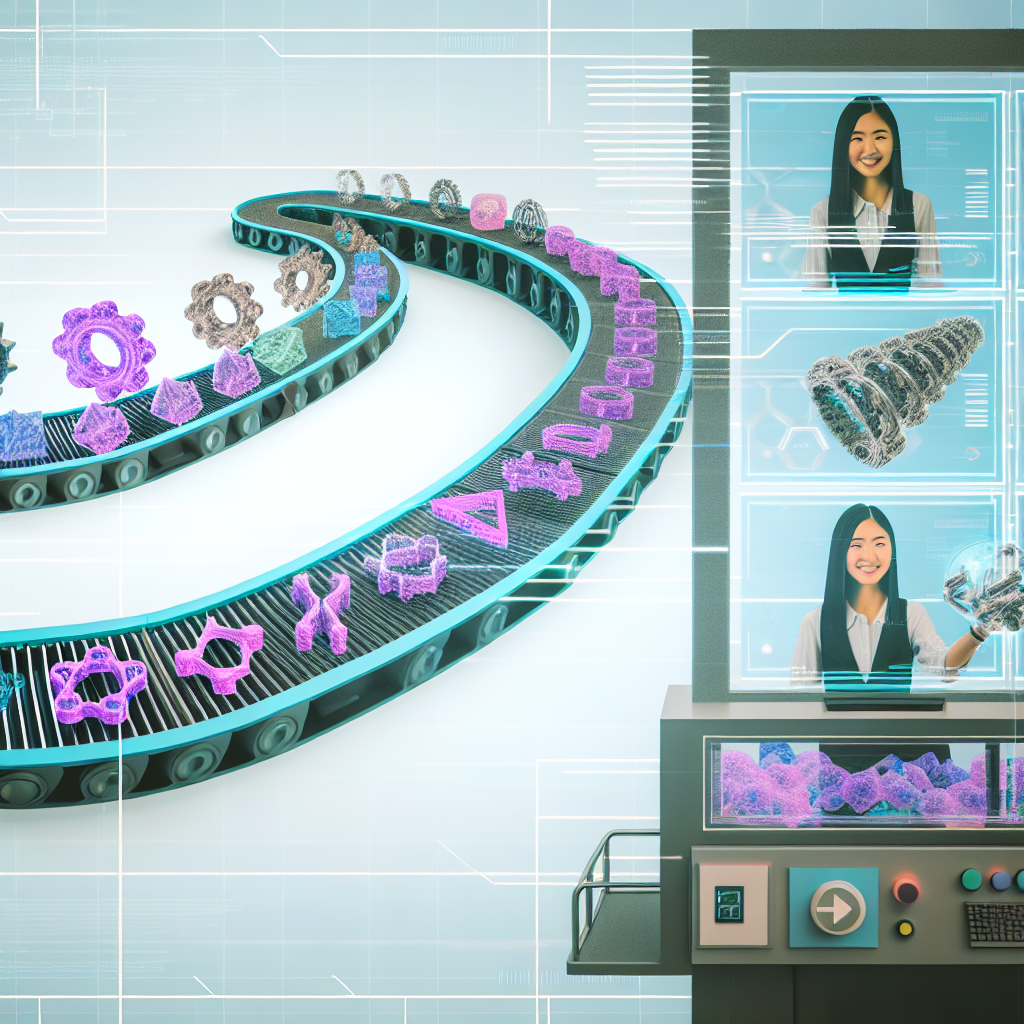
Revolutionizing Industries: How Additive Manufacturing is Shaping the Future
Imagine a world where you no longer need to wait weeks for a critical part to arrive. Instead, you can simply press a button, and within hours, your item is created right in your own workshop or living room. Sounds like science fiction? Welcome to the realm of additive manufacturing, often referred to as 3D printing — a technology that is not just changing how we create but is revolutionizing entire industries. For tech enthusiasts, this isn’t just a gimmick; it’s a playground of innovation.
The A to Z of Additive Manufacturing
At its core, additive manufacturing is a process that builds objects layer by layer from digital files. Unlike traditional manufacturing, which often involves subtracting material (think cutting, drilling, or milling), additive manufacturing adds material only where it’s needed. This innovative approach is creating opportunities few could have imagined. But why is it gaining traction, and what makes it special?
Cost Efficiency and Waste Reduction
Let’s dive into the economics. Traditional manufacturing processes can be costly and wasteful. A significant percentage of materials used in machining processes ends up as scrap. In contrast, additive manufacturing drastically reduces waste because it uses only the material necessary to produce an object. This efficiency leads to cost savings and less environmental impact, which is a win-win situation for businesses and the planet.
Real-World Example: Automotive Industry
The automotive sector is embracing this technology with open arms. Companies like Ford and BMW have started using 3D printing to create prototype parts and tools. For instance, Ford recently produced an innovative part for a truck using additive manufacturing, saving thousands of dollars in production costs and significantly reducing lead time. Imagine being able to create custom parts on demand versus waiting for weeks for standard parts. This shift not only speeds up production but also leads to greater customer satisfaction and adaptability.
Customization at Your Fingertips
Every gamer knows the importance of personalization. Whether it’s a custom controller or an in-game character, having the option to modify enhances the experience. Additive manufacturing opens exciting avenues for customization across various industries.
A Gamified Example: Gaming Accessories
Imagine a world where you can design your gaming accessories tailored to fit perfectly in your hand or even create limited edition pieces that nobody else has. Companies have already begun offering customizable gaming headsets or VR controllers where players can select colors, shapes, and additional features precisely how they like them. Platforms enable designs to be uploaded, modified, and ultimately printed, making a personalized product a reality.
Rapid Prototyping: Turning Ideas into Reality
In any tech-related field, ideas are gold. The faster you can turn an idea into a physical prototype, the better your chances of success. Additive manufacturing simplifies this process. It allows designers and engineers to create complex shapes and structures that would be impossible with traditional methods.
Case Study: Startups and Innovation Hubs
Consider a startup in the electronic devices sector. Instead of spending months and thousands of dollars to build a physical model of their innovative gadget, they can use 3D printing to create a prototype in just a few days. This quick turnaround not only saves money but also accelerates the iterative design process, allowing for rapid testing and improvement. In some cases, this has led to products hitting the market faster than the competition, showcasing how critical speed can be in tech-driven businesses.
A New Era for Medical Innovation
The medical field is experiencing a seismic shift because of additive manufacturing. Imagine personalized implants and prosthetics made specifically to fit an individual patient’s anatomy. This is no longer merely speculative; it’s happening now. Doctors can use 3D printing to create models of organs for surgical planning, leading to better outcomes.
Success Story: Personalized Prosthetics
Organizations are pioneering in the realm of prosthetics, using 3D printing to create lightweight and tailored solutions. A notable company, E-nable, produces 3D-printed prosthetic hands for children at a fraction of the cost of traditional prosthetics. These devices not only fit better but can also be designed in unique colors and styles, making them more appealing to young users. This blend of practicality and personalization illustrates how additive manufacturing can provide real-world solutions that improve lives.
Challenges and the Road Ahead
Despite its promise, additive manufacturing faces hurdles. Quality control remains a concern, as does the need for specialized skills in the workforce. Many traditional industries are still catching up and may resist these changes due to established practices and investments in existing technologies.
The Path Forward
As 3D printing technology matures, educational institutions and companies are beginning to equip workers with the needed skills, promoting widespread adoption. By fostering innovation through collaboration, we can expect a future where additive manufacturing plays an integral role in creating advanced solutions across various sectors. The future will belong to those willing to adapt, experiment, and create.
Final Thoughts
For the tech enthusiasts and casual gamers who thrive on innovation, additive manufacturing is more than just a new tool; it’s a revolution in how we think about production, customization, and creativity. Whether it’s designing gaming gear or manufacturing life-changing medical devices, 3D printing has the potential to turn our wildest ideas into reality.
The journey of additive manufacturing is just beginning. As technology evolves and becomes more accessible, who knows what the future holds? Perhaps one day, everyone will have access to their own 3D printer, ready to create everything from a new game character to lifesaving medical equipment. The possibilities are as endless as the imagination itself.

