

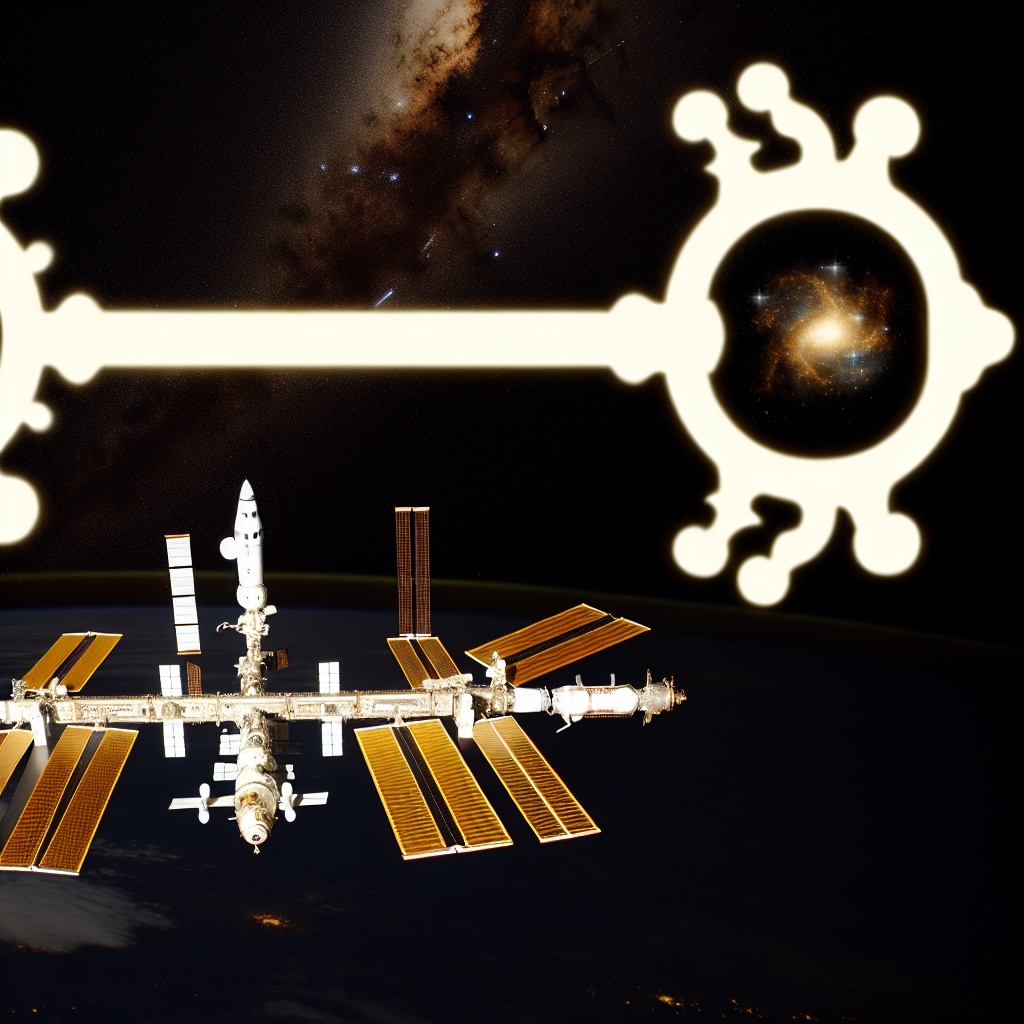
Unlocking the Mysteries of the International Space Station: How It’s Revolutionizing Space Exploration Today
Imagine floating in zero gravity, surrounded by breathtaking views of Earth against a backdrop of stars—this isn’t a scene from a sci-fi movie, but the reality aboard the International Space Station (ISS). This scientific marvel is not just a space laboratory; it’s a unique platform revolutionizing how we understand our universe. Let’s dive deep into how the ISS is changing the face of space exploration today.
A Brief History of the ISS
The story of the ISS is one of human collaboration and ingenuity. Launched in 1998, the ISS is a joint project involving space agencies from the United States, Russia, Europe, Japan, and Canada. Designed as both a home and a laboratory for astronauts, it orbits Earth at about 17,500 miles per hour, traveling at speeds that would cover the distance from New York to Boston in just a few minutes.
While it may seem like a distant entity, the ISS has become an integral part of our daily lives. Its research contributes not just to astronomy but to fields like medicine, technology, and even climate science. This makes it a living example of international cooperation in the pursuit of knowledge and exploration.
The Science Behind Space Exploration
One of the most fascinating aspects of the ISS is its role in advancing scientific research. Experiments conducted in microgravity provide insights that are impossible to achieve on Earth. Here are a few examples:
- Microbial Behavior: Research aboard the ISS has shown that some bacteria become more virulent in space. Understanding this can help develop better medical treatments for infections.
- Plant Growth: Scientists are studying how plants grow in microgravity. This knowledge is crucial for future long-term space missions where growing food will be essential.
- Materials Science: The peculiar conditions of space allow scientists to study how materials behave at different temperatures and pressures. This has already led to advancements in various technological applications.
These experiments not only advance our understanding of fundamental science but also contribute to technologies that enhance life on Earth—an impressive example of how space exploration can yield practical benefits.
Education and Inspiration: Opening Doors for the Next Generation
The ISS is also a powerful tool for education and inspiration. Through programs like “Earth to ISS,” students can participate in live Q&A sessions with astronauts, sparking interest in science and engineering careers. Imagine a classroom filled with young minds eager to learn about black holes one moment and discussing the challenges of maintaining a garden in space the next!
Moreover, the ISS has a dedicated initiative to encourage STEM (Science, Technology, Engineering, and Mathematics) education globally. By sharing its science and innovations, it generates excitement around space exploration and inspires a new generation to dream big.
Commercial Opportunities and the Future of Space Travel
As technology advances, the role of private companies in space exploration is growing. NASA’s Commercial Crew Program, aimed at reducing costs and expanding capabilities for transporting astronauts to and from the ISS, has opened the door to innovative partnerships. Companies like SpaceX and Boeing have made strides in developing spacecraft that can safely carry humans and cargo to the ISS.
The implications of this shift are monumental. Not only does it allow for increased access to the ISS, but it also paves the way for potential commercial ventures beyond our planet. Imagine a future where tourists can experience microgravity, or space hotels might become a reality!
International Collaboration: The Heart of the ISS
What makes the ISS truly special is the collaboration it represents among nations. Every day, astronauts from various countries work together to conduct research, solve problems, and share knowledge. This unity in diversity is a clear indication that science can transcend borders and bring humanity closer.
Take the example of European astronaut Samantha Cristoforetti, who conducted experiments on how motion affects the human eye in microgravity. Her research isn’t just scientifically relevant for astronauts but can lead to advancements in vision correction practices here on Earth.
In a world that often seems divided, the ISS stands as a beacon of teamwork and innovation, reminding us that when we come together for a common cause, the possibilities are limitless.
The Future: What Lies Ahead for the ISS and Beyond
Looking into the future, the ISS is set to play a pivotal role in upcoming space missions. NASA’s plans for Artemis aim to return humans to the Moon by 2024, with the ISS serving as a springboard for developing new technologies and training astronauts. These advancements will ultimately help prepare for more ambitious endeavors such as Mars exploration.
As the ISS approaches the end of its operational life, discussions about its successor, or the establishment of lunar bases, are already underway. What will this mean for humanity? A turning point in our journey toward becoming an interplanetary species—a concept that once resided in the realm of science fiction but is gradually becoming a reality.
Conclusion
The International Space Station may orbit our planet, yet its impact is profoundly earthly. By fostering scientific discovery, encouraging educational pursuits, and exemplifying international collaboration, it is reshaping our understanding of space and life itself. As we stand on the brink of a new era in space exploration, the ISS serves not only as a platform for scientific research but as a symbol of what humanity can achieve together. So next time you look up at the stars, remember that there’s a world of innovation and inspiration floating above, waiting to unlock even more mysteries of the universe.

